
Can Science and Yoga Both Be True?
Aug 24, 2026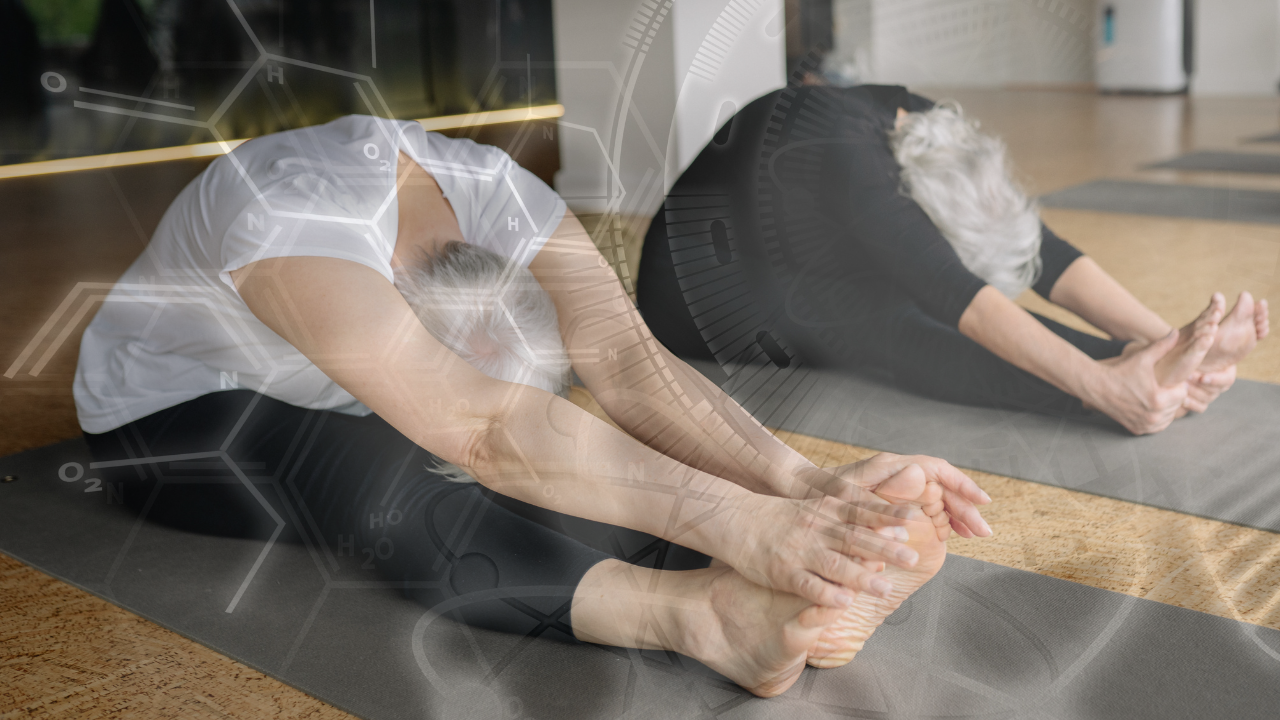
by Julia Jonson, Yoga Educator, E-RYT 500
"The most beautiful experience we can have is the mysterious."
— Albert Einstein
I grew up loving science.
My mom was an operating room nurse, so anatomy was simply part of my childhood. Anatomy books were always around the house, along with hip replacement components, model skeletons and joints, and all kinds of orthopedic teaching tools. We even watched VHS recordings of surgeries together—although I must admit, I didn't love that part when they happened to be playing around dinnertime! 😊
I learned the names of bones and muscles long before I ever became a yoga teacher. I still enjoy soaking up details about neuroscience, biomechanics, fascia, and the incredible discoveries modern medicine continues to make.
Science has given humanity extraordinary gifts. It has relieved suffering, saved lives, and revealed the remarkable intelligence of the human body. I am deeply grateful for it.
Yoga taught me something else—something just as valuable that I believe changed the trajectory of my life.
You can’t measure love with an MRI. You can’t find the essence of who someone is under a microscope or in a laboratory. You can’t locate courage, forgiveness, grief, or joy on a scientific instrument. These things are no less real simply because they cannot be measured. I’ve worked tirelessly to cultivate these “inner” qualities within myself—and I still have so much to discover.
You see, science and yoga are asking different questions. Science asks, How does it work? Yoga asks, How do we live?
One explores the body and the physical world. The other explores the experience of being human. For me, these aren't competing worldviews. They are complementary ones.
I've noticed in modern yoga, a tendency to translate every ancient teaching into the language of science.
We hear things like, "Prāṇa is just oxygen," "The chakras are simply nerve plexuses," or "Kundalinī is just the nervous system." While these comparisons are well-intentioned, its important to look deeper. The Yoga Sutras never define prāṇa as oxygen, and the Haṭha Yoga Pradīpikā describes prāṇa as a subtle life force—closely related to, but not reducible to, the breath. Likewise, the chakras were never presented as anatomical structures, but as subtle centers of awareness and transformation.
In much the same way, a physiologist might describe diaphragmatic breathing, vagal tone, and heart-rate variability, while the yoga tradition describes the same experience as prāṇa flowing and becoming balanced.
These are not competing explanations. They are different languages describing overlapping aspects of being human. One doesn't replace the other—they enrich one another.
I've been inspired by what I've read about Swami Rama. He was was an Indian yogi, spiritual teacher, and author who helped introduce Himalayan yoga traditions to Western audiences.
He was raised and trained in the Himalayan tradition and became known for bringing yoga, meditation, pranayama, and the study of the mind into dialogue with modern science. He was famously studied at the Menninger Foundation in the 1970s, where researchers observed his ability to voluntarily influence physiological processes traditionally thought to be involuntary.
He believed deeply that science and yoga could enrich one another. Researchers documented his remarkable ability to voluntarily influence physiological processes long considered involuntary—including heart rhythm, skin temperature, and brain wave patterns. His purpose wasn't to prove he was extraordinary. Rather, it was to demonstrate the untapped potential of the human mind and to encourage a dialogue between Eastern contemplative traditions and Western science.
I love that perspective. It reminds us that we don't have to choose between science and yoga. Science helps us understand the body and its mechanisms. Yoga helps us understand our inner experience and our relationship to life. They're not competing for the truth—they're offering different, complementary ways of exploring what it means to be human. Expanding awareness to embrace both, together, can be healing!
Today, I sometimes hear people reduce yoga’s mystical teachings to science - perhaps unintentionally. I don’t think either science or yoga benefits from reducing one to the language of the other. Science doesn’t need to prove yoga for yoga to have value, and yoga doesn’t need to reject science to preserve its wisdom. Furthermore, yoga is both an art and a science: an art of living, and a science of self-discovery.
Both ask us to observe carefully. Both require humility. Both invite us to remain curious.
Swami Rama explained his extraordinary physiological control to the Menninger Foundation researchers by saying:
"All of the body is within the mind, but not all of the mind is within the body."
I love science. I also love that there are parts of being human that remain beautifully mysterious.
Perhaps wisdom isn't found in choosing one over the other. Rather, it's found in holding both with reverence—allowing science to deepen our understanding of the body, and allowing yoga to deepen our understanding of ourselves.
And maybe, the greatest discoveries still begin the same way they always have: With wonder.

